Georgia on My Mind
I fell in love with "Georgia on My Mind" as a teenager when I heard the classic Ray Charles version. In my early twenties, when I began arranging, I soon started thinking about learning "Georgia." I loved Ray's soulfulness and the underlying triplet feel, both of which were major influences.
The version featured first appeared in my 2006 Hal Leonard book, Fingerstyle Standards. I'm sure it has evolved a lot from my original conception, but I have no written or recorded reference. The important thing is that I thought about it for a long time and will likely approach it again in the future.
The video performance by the great Kevin Loh was filmed in 2020. Kevin recorded his original video in 2014. I am flattered that he recorded the arrangement and played it so well. I have also learned that Kevin has occasionally played it as an encore in his concerts.
History of the song:
Hoagy Carmichael wrote “Georgia on My Mind" in 1930 as an instrumental.
When Stuart Gorrell heard Hoagy play the melody at a party, he stayed up all night with Hoagy, writing the lyrics in an apartment in New York. Stuart was an old friend and former roommate from their time as students at the University of Indiana in Bloomington.
"Georgia on My Mind" was first recorded the same year it was written by Hoagy Carmichael and his Orchestra at the RCA Victor studio in New York on September 15, 1930. The 78 Victor record was titled "Georgia" - Fox Trot, a popular dance of the time. The B side was a song titled "One Night in Havana." It is interesting to note that Bix Beiderbecke played cornet on the session.
RCA (Radio Corporation of America) bought the Victor Talking Machine Company in 1929, leading to the formation of RCA Victor in 1930. Though the full corporate name became RCA Victor, the older name "Victor" was still used on their records through the 1930s and 1940s.
There is no exact count of how many recordings of "Georgia" have been made since 1930, but it's certainly in the thousands, with the 1960 version by Ray Charles being the most widely known. In 1979, the state of Georgia designated it as the official state song.
The Composer:
Hoagland Howard "Hoagy" Carmichael was born in Bloomington, Indiana, on November 22, 1899, and died in Rancho Mirage, California, on December 27, 1981. His father was Howard Clyde Carmichael, and his mother was Lida Mary (Robison) Carmichael.
An autobiography states that when a new railway spur was being built on the Monon line near Harrodsburg, some of the surveyors were living in the neighborhood. One of the men, named Harry Hoagland, was boarding with a relative during Lida's pregnancy. She liked the unusual name and called her newborn son Hoagland Howard Carmichael.
Hoagy's mother, Lida, taught him to sing and play the piano. She was a pianist who played in silent movie theaters, nickelodeons, and for private parties. Hoagy's only other musical training was a few piano lessons from Reginald DuValle, a bandleader who lived in nearby Indianapolis.
Hoagy Carmichael became a member of ASCAP in 1931 and, in 1932, began writing songs for Ralph Peer's Southern Music Company, the first song publisher to occupy the Brill Building in New York City, which became the mecca for songwriters and publishers.
Hoagy went on to become one of the most successful songwriters of the 1930s and 1940s. Some of his classic songs include "Stardust," "Skylark," "Heart and Soul," "The Nearness of You," "I Get Along Without You Very Well," "Up a Lazy River," "Ole Buttermilk Sky," among many others.
Hoagy, his wife, and two sons left New York in 1942 and moved to Los Angeles, where Hoagy pursued writing for the film industry. He also played character roles in 14 films, including To Have and Have Not (1944), starring Humphrey Bogart and Lauren Bacall.
In addition to his songwriting and film roles, Hoagy hosted radio programs, performed on television, and wrote two autobiographies.
Closing remarks:
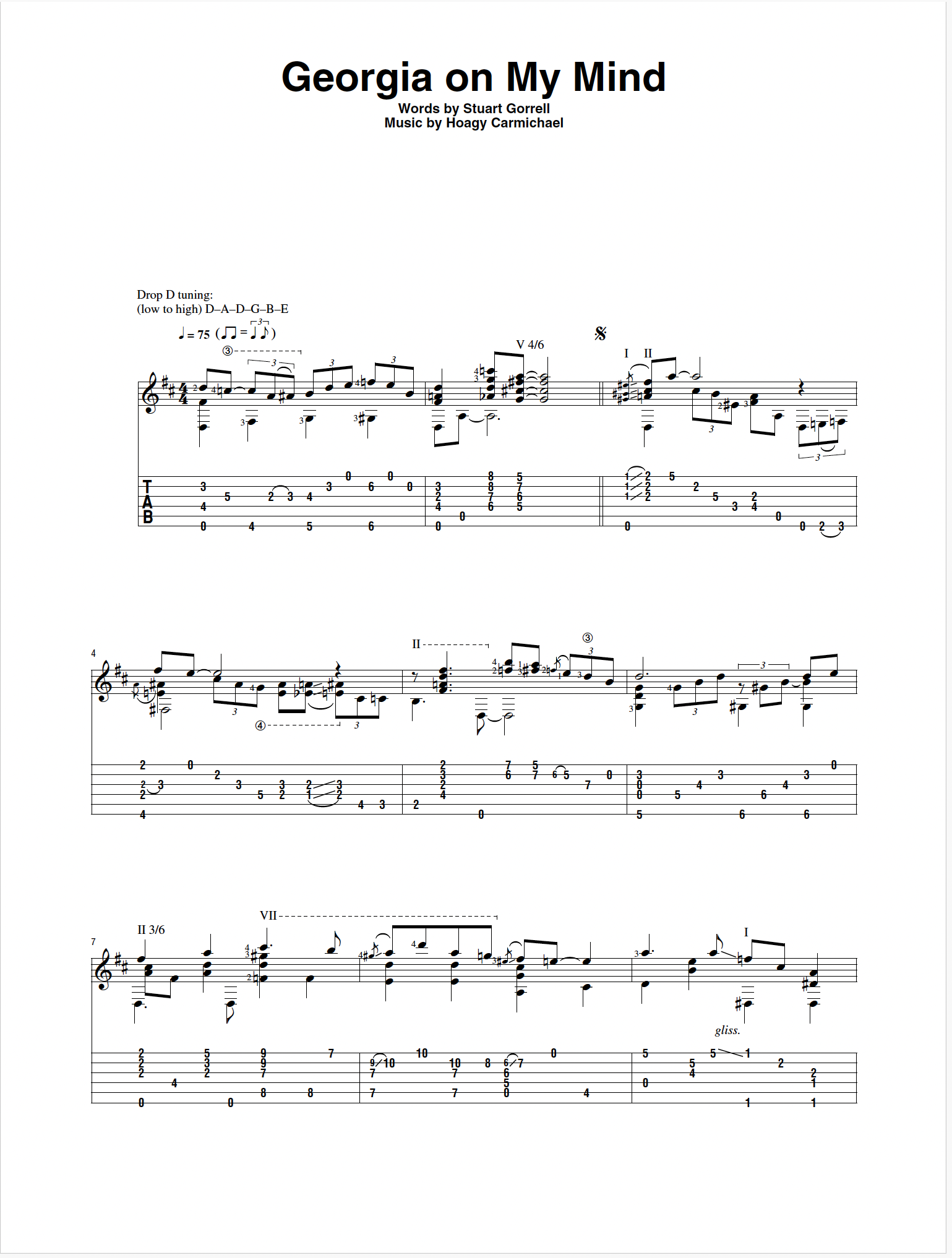
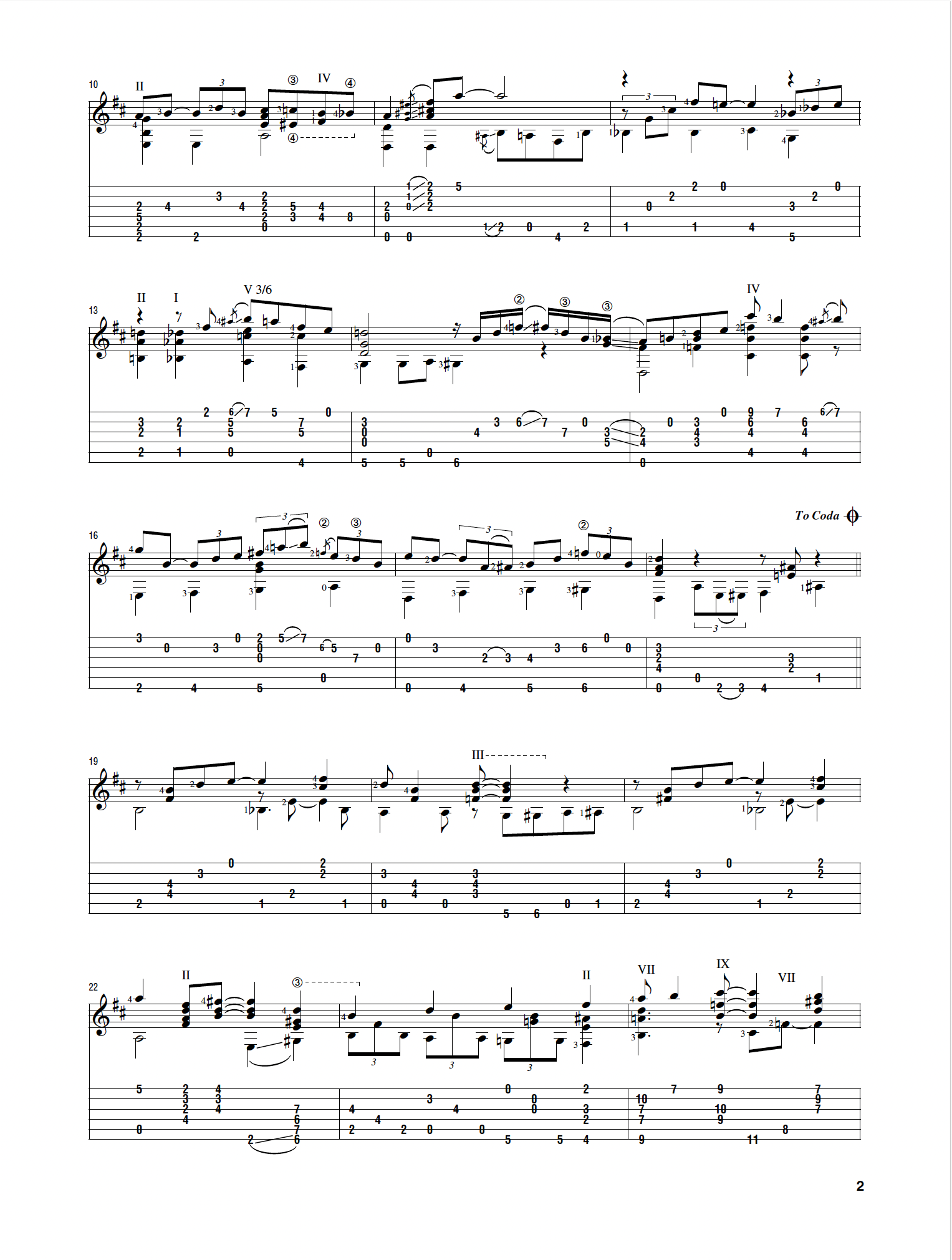
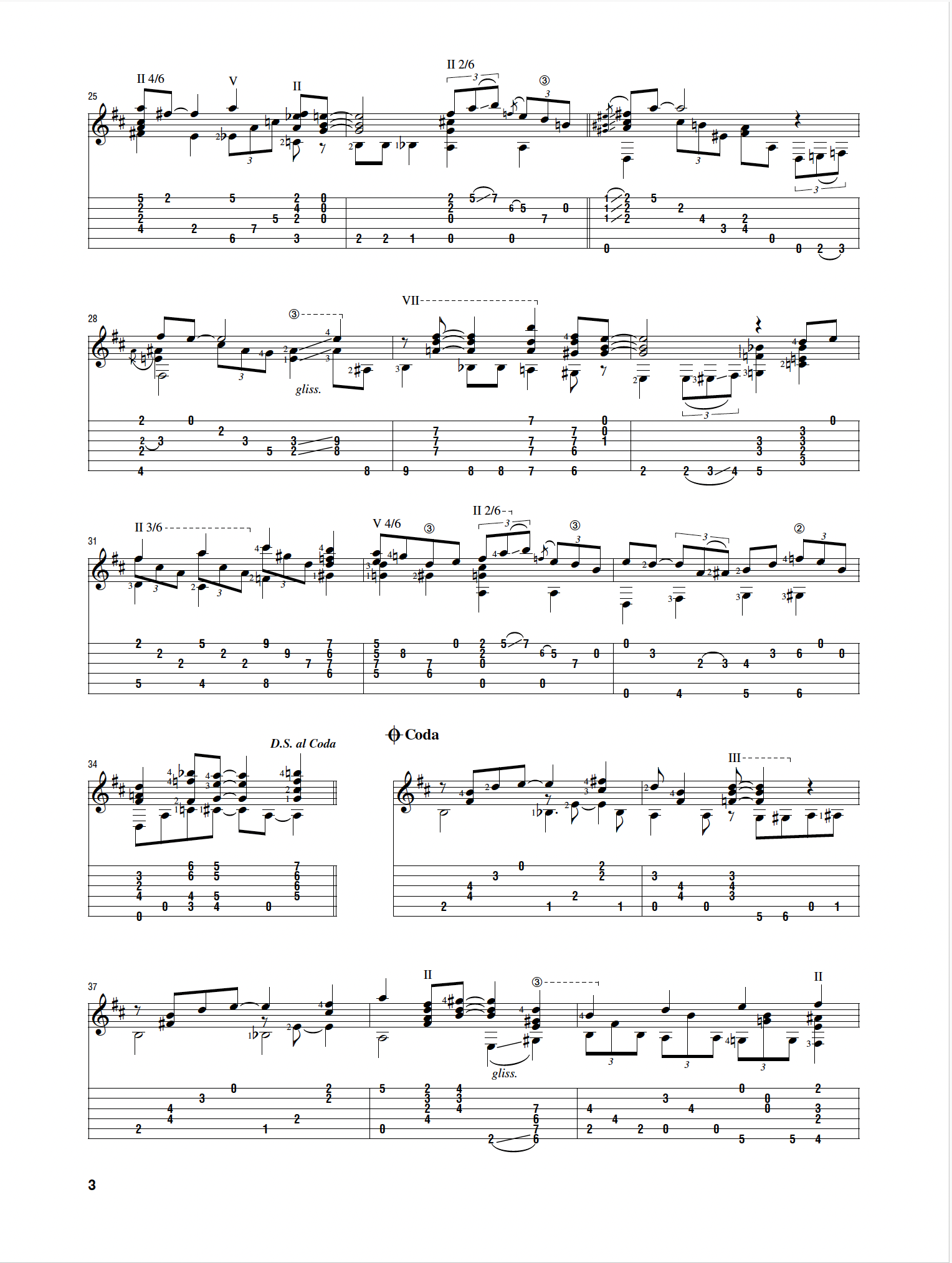
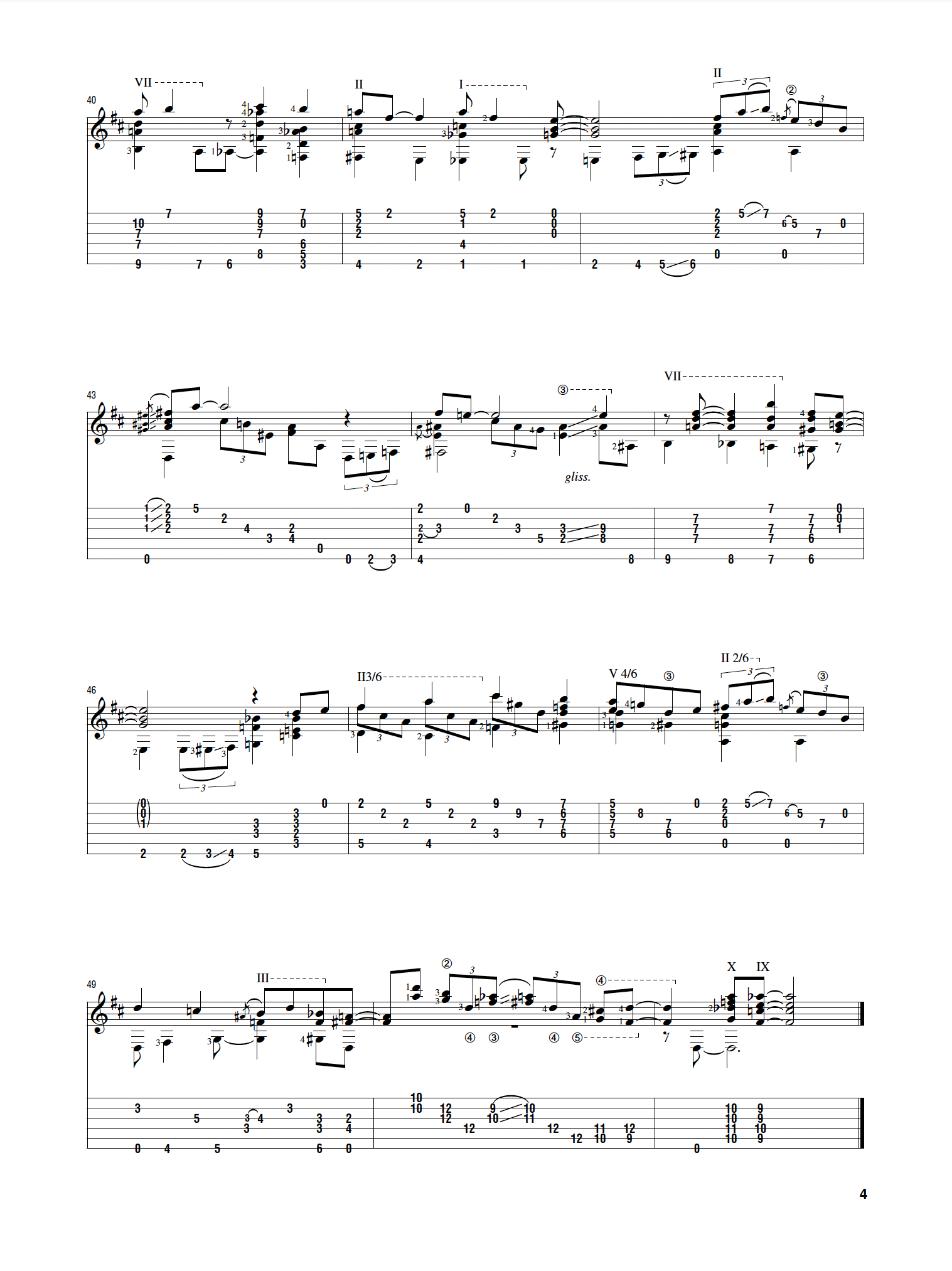
The arrangement is filled with grace notes, slides, and slurs. Be sure to play them clean and maintain your tempo. That's not to say you can't use expressive phrasing; however, it's essential to be able to play in time. You can express yourself after that. Play the piece with jazz 8ths, aka, swing feel. Swing feel, triplets, and soul are the backbone of the piece. Be sure the melody stands out, and listen to Ray Charles sing "Georgia on My Mind."
Being a standard, "Georgia" will serve you well when performing it. Half the battle is won when so many love the song.